Signs of Addiction to Weed: Understanding When Use Becomes a Concern
- Felicia Parris

- Feb 9
- 4 min read
Marijuana is often perceived as a low-risk or non-addictive substance, especially as legalization and social acceptance continue to grow. While many people use cannabis occasionally without significant issues, some individuals develop patterns of use that interfere with their daily lives. Recognizing the signs of addiction to weed, also known clinically as cannabis use disorder, can help individuals and families better understand when use may have crossed into a problem.
Addiction does not always look the same for everyone. It exists on a spectrum, and signs may appear gradually, making them easy to overlook. Learning what to watch for can support early awareness and informed decision-making.
What Does Weed Addiction Mean?
Weed addiction refers to a pattern of cannabis use that leads to difficulty controlling intake despite negative consequences. From a clinical standpoint, cannabis use disorder is characterized by continued use even when it causes emotional, social, physical, or functional problems.
It is important to note that not everyone who uses marijuana becomes addicted. Risk factors such as frequency of use, age of first exposure, potency of products, and individual mental health history all play a role.
Behavioral Signs of Weed Addiction
One of the earliest indicators of a developing problem often shows up in behavior. Individuals may find themselves using marijuana more frequently or in larger amounts than intended. What once felt optional can start to feel necessary.
Common behavioral signs include:
Difficulty cutting back or stopping use
Using marijuana as a primary way to relax or cope
Spending significant time obtaining, using, or recovering from cannabis
Neglecting responsibilities at work, school, or home
Continuing use despite interpersonal conflicts
These patterns can slowly disrupt daily routines and relationships, even if the individual does not immediately recognize the connection.
Emotional and Psychological Indicators
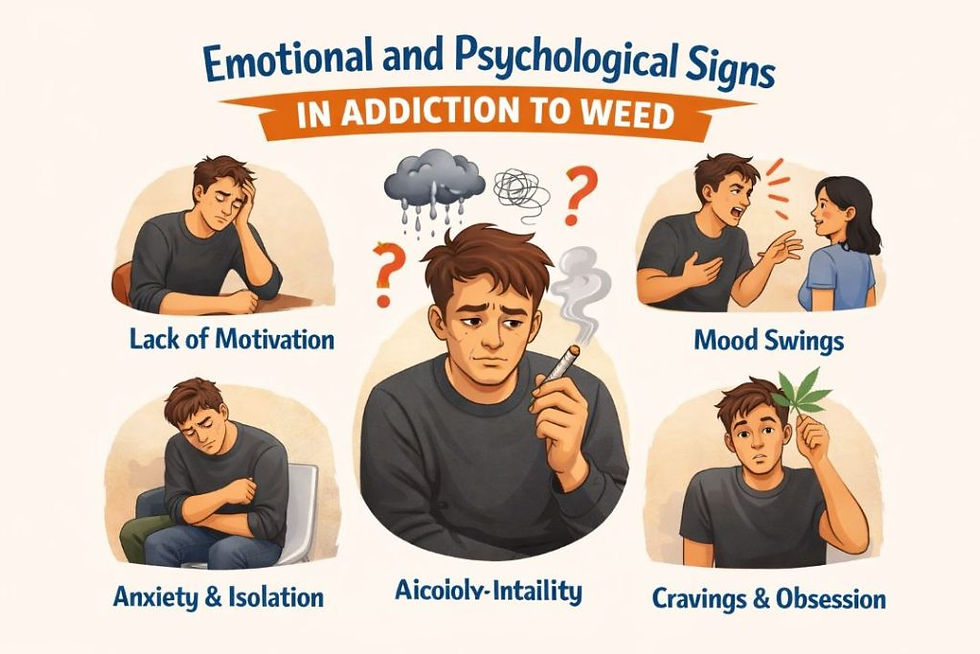
Weed addiction can also affect emotional well-being. Some people begin using cannabis to manage stress, anxiety, or low mood, but over time, reliance on marijuana can worsen these underlying concerns.
Possible emotional signs include:
Increased irritability when not using marijuana
Mood swings or emotional numbness
Anxiety or restlessness during periods without use
Reduced motivation or interest in previously enjoyable activities
In some cases, individuals may feel dependent on marijuana to feel “normal” or emotionally balanced, which can signal an unhealthy reliance.
Physical and Cognitive Changes
Although marijuana is often viewed as less physically harmful than other substances, regular use can still impact the body and brain. Physical signs may be subtle but noticeable over time.
These may include:
Changes in sleep patterns
Fatigue or low energy
Memory or concentration difficulties
Increased tolerance, requiring more cannabis for the same effect
Cognitive effects, such as reduced focus or slower reaction time, can affect academic or professional performance, especially with frequent use.
Impact on Daily Functioning
A key factor in identifying addiction is how marijuana use affects everyday life. When use begins to interfere with normal functioning, it may be time to take a closer look.
Functional signs may involve:
Declining performance at work or school
Withdrawal from social activities not involving marijuana
Financial strain related to cannabis spending
Loss of structure or routine
Even when consequences are present, individuals may minimize their impact or attribute difficulties to other causes.
Tolerance and Withdrawal Symptoms
As with many substances, regular marijuana use can lead to tolerance. This means more of the substance is needed to achieve the same effects. When use is reduced or stopped, some individuals experience withdrawal symptoms.
Common cannabis withdrawal symptoms include:
Irritability or frustration
Sleep disturbances
Reduced appetite
Headaches or restlessness
Cravings for marijuana
While these symptoms are typically not dangerous, they can be uncomfortable enough to make quitting difficult without support.
When Occasional Use Becomes a Pattern
Not every sign on its own indicates addiction. However, when multiple signs appear together and persist over time, they may suggest that marijuana use is no longer under control.
Questions that may help with self-reflection include:
Do I rely on weed to manage emotions or stress?
Have others expressed concern about my use?
Has marijuana affected my responsibilities or goals?
Do I feel uneasy when I can’t use it?
Honest reflection can be a valuable first step toward understanding one’s relationship with cannabis.
Co-Occurring Mental Health Considerations
Weed addiction often overlaps with mental health concerns such as anxiety, depression, or trauma-related conditions. In some cases, marijuana use begins as a coping mechanism, but over time, it can intensify symptoms or complicate recovery.
When emotional distress and substance use interact, addressing both together is often more effective than treating them separately.
Why Awareness Matters
Recognizing the signs of weed addiction does not mean labeling or judging. Awareness allows individuals to make informed choices, seek guidance if needed, and prevent further disruption to their well-being.
Early recognition can also reduce the risk of long-term consequences, especially for adolescents and young adults whose brains are still developing.
Taking the /Next Step Gently
If you or someone you care about recognizes several of these signs, it may be helpful to learn more about available support options. Understanding treatment approaches, assessment tools, or professional guidance can provide clarity without pressure.
If you’re unsure whether marijuana use has become a concern, having a confidential conversation with a knowledgeable professional can offer perspective and help you explore options at your own pace. Learning more doesn’t require commitment, just curiosity and care for your well-being.
Reach out to DeLand Treatment Solutions at (386) 866-8689, because help is available, and recovery can begin today.
Medical Disclaimer: This article is for informational purposes only and does not replace professional medical or mental health advice. Always consult qualified healthcare providers for personalized guidance.


Comments